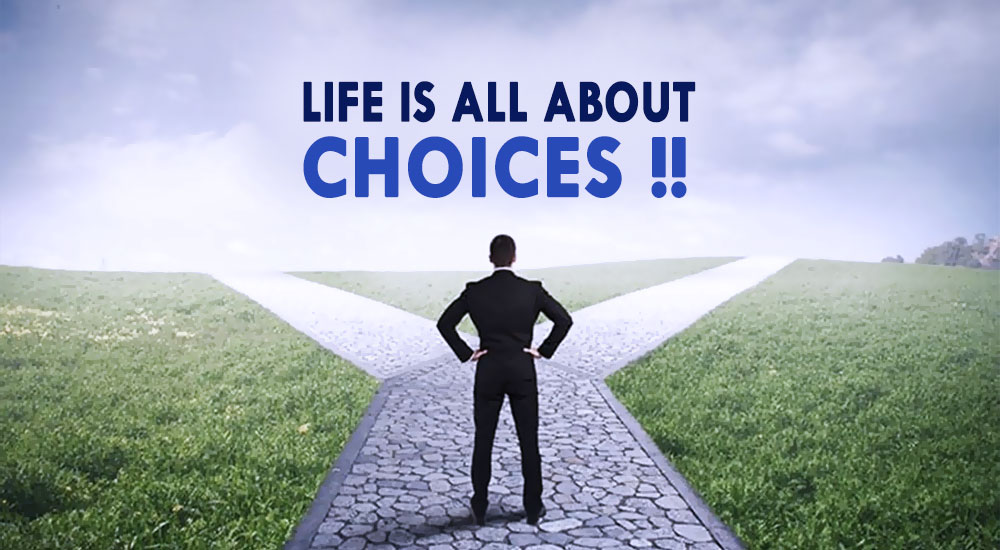
When Choice Becomes Destiny
In Their Words
Michelle Obama – Former First Lady of the United States
“You may not always have a comfortable life… but remember that the choices you make, and the way you accept responsibility for them, are what define you.”
Stephen R. Covey – The 7 Habits of Highly Effective People
“I am not a product of my circumstances. I am a product of my decisions.”
James Clear – Atomic Habits
“Every action you take is a vote for the type of person you wish to become.”
The Problem with “I Have To”
When you strip life down to its most basic truth, there’s only one thing we can’t escape—we all have to die. Everything else is a choice, even taxes, with some repercussions if you chose to not pay them.
I recently spoke with a close childhood friend about a promise he agreed to between him and one of his closes friends father before passing away: to be a big brother figure to a family friend. He felt obligated, as if he “had to” do it. I reminded him—he didn’t have to do anything.
Yes, ignoring the request might have made him look like a bad person. And yes, the weight of a dying man’s wish carries emotional gravity. But at the end of the day, it was still his choice. He chose to step up—not because he was forced, but because he decided to be a good man.
The same is true in everyday situations:
- Someone insults you? You choose whether to get angry.
- In a toxic relationship? You choose to stay or leave.
Why People Avoid Choosing
It’s often easier to push responsibility away. Blaming circumstances allows you to justify your feelings or inaction.
If I’m broke, it’s convenient to blame the economy instead of admitting I didn’t try enough. If I say, “I can’t get a job because I’m Black,” I’ve created a mental escape hatch that excuses me from continuing to try.
Yes—obstacles exist. But obstacles are not brick walls. They make the climb harder, not impossible.
You Choose What You Care About
Mark Manson, in The Subtle Art of Not Giving a Fck*, nails this concept: it’s not that we shouldn’t care about anything, but that we should choose carefully what we give our energy to.
I choose to care about my family, my friends, my career, and helping others. If my blog inspires even one person—like my cousin JB, who decided to pursue his IT certifications after reading my work—I consider it success, everything else after is just icing.
I choose not to give a fuck about things that bring no benefit, no growth, and no intellectual value. Every day I aim to improve—even if just slightly—and on days I don’t, I’m fine with it.
Situational Choice
Situation: You have a major argument with your partner.
Perception (Have To): “I have to prove I’m right.”
Actual Choice: Choose to de-escalate, let go of anger, and protect the relationship.
Situation: You want a career promotion.
Perception (Have To): “I have to wait for someone to notice me.”
Actual Choice: Seek mentorship, take initiative, and actively apply for growth opportunities.
Situation: You’re exhausted after work but need to study.
Perception (Have To): “I’ll wait until I have more time.”
Actual Choice: Commit to short daily study sessions and adjust your schedule.
Situation: A colleague takes credit for your idea.
Perception (Have To): “I have to react with anger.”
Actual Choice: Address it privately and strategically to protect relationships and credibility.
Situation: Someone gives you tough feedback.
Perception (Have To): “I have to get defensive or shut down.”
Actual Choice: Listen, reflect, and make changes that improve your impact.
You can still chose the option that you thought you Have to do.
The Power of Choice
Choice is always part of the equation. Taking responsibility for wins and losses makes success more predictable and builds habits that create momentum.
When you don’t land the job, or find success elsewhere in life and say x was the reason that prevented me from this. Shouldn’t you also give x credit when you do succeed? No. You should want the credit for winning, but you should also accept the responsibility of losing, and use the situation of losing to improve your chances of winning.
Your metric for success is personal—it can be as small as keeping a tidy workspace or as big as climbing Mount Everest. Whatever it is, it’s attainable. If you fail, learn, adjust, and try again.
Don’t give away your greatest power—the ability to choose. Success is rarely an accident. It’s a decision.
Check out a recent post of mine about the Mental Montage. It relates really well to this post.
The Blueprint Mindset | Blog Posts | The 7 Habits of Highly Effective People | Atomic Habits


Leave a Reply