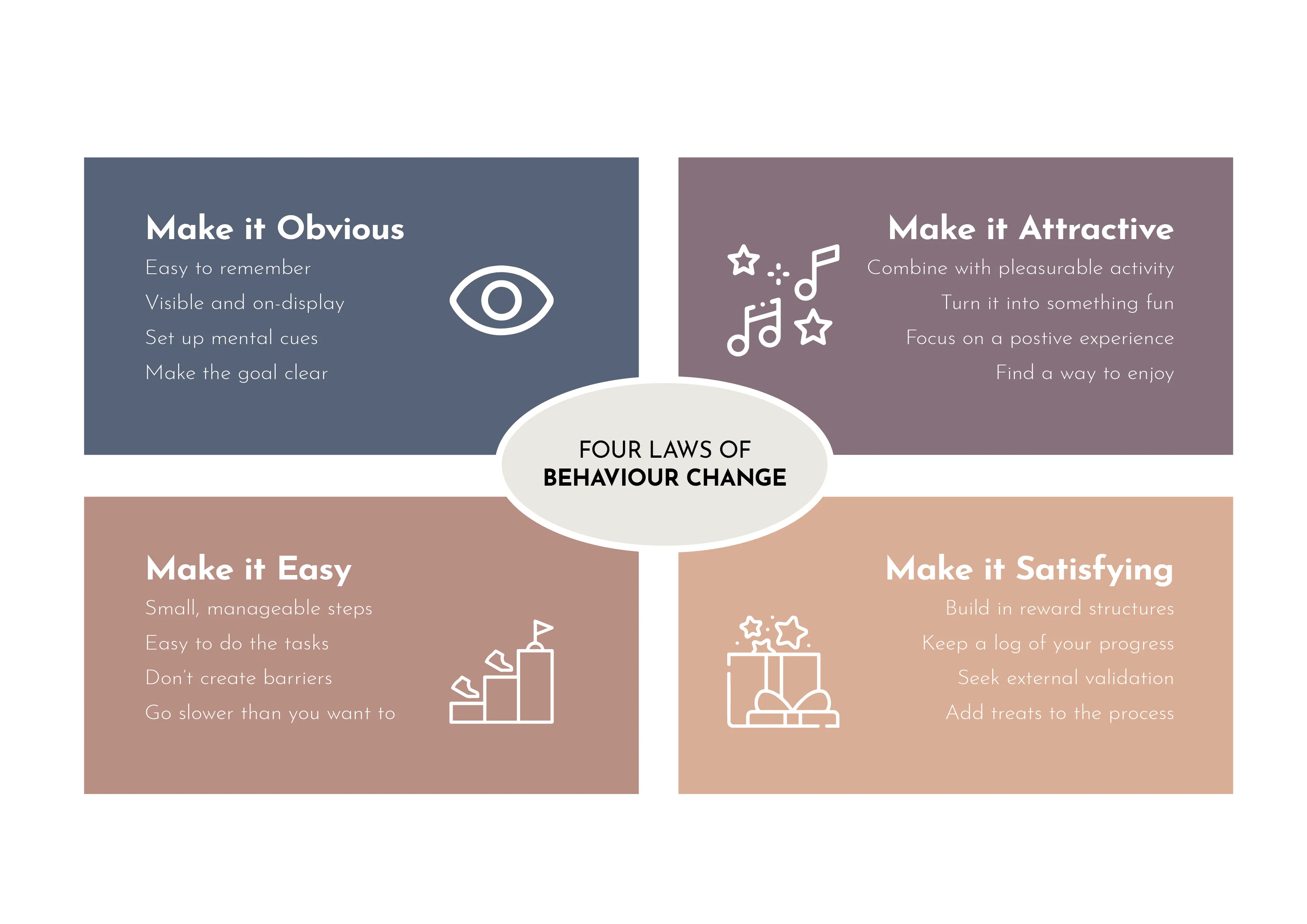
Make It Obvious
Before I ever picked up Atomic Habits, I had already started discovering these laws in my own life. Once I understood them, they felt like cheat codes for success — tools to improve my habits and increase my chances of winning every day.
The first law, “Make it Obvious,” sounds simple but can feel vague in practice. Sure, if you want to stop forgetting your keys, you can leave them somewhere visible — near the door or next to your wallet. But what about bigger goals, like working out more or going for a daily run? How do you “make that obvious”?
The Power of Planning
When I first wanted to start running consistently, my biggest barrier was not knowing when or where. That lack of clarity killed my motivation before I even started.
Eventually, I learned to make it obvious by setting a clear plan:
“As soon as I get home, have a snack, lace up, and go run.”
I used to set alarms, but they were too easy to ignore. I’d hit stop, get distracted, and lose momentum. But building a visible, predictable cue into my daily flow — coming home, snack, run — made all the difference.
Limiting My Chances for Failure
I also started recognizing my own traps — the small decisions that made skipping easier.
For example, I’d come home from work, tired, and want to play a quick game to “relax.” Next thing I knew, it was dark outside, and I’d missed my run. So I created mental cues:
- Reach a stopping point in the game.
- Shut it down.
- Lace up immediately.
For lifting weights, I take advantage of the natural energy I have when I first get home. For studying my PMP certification, I save it for the calm before bed — a time when I’m most focused.
Each activity has a clear, visible trigger in my day.
Make the Goal Clear
Here’s what a typical week looks like for me:
- Monday: 30-minute recovery run, lift after work, study PMP at 8 PM.
- Tuesday: Squats after work, study at 8 PM.
- Wednesday: Lift after work, 3-mile run, study at 8 PM.
- And so on…
The clearer your schedule, the less you have to think. After enough repetition, it becomes second nature — a known routine that happens almost automatically.
Visible and on Display
This one is my favorite.
Everyone forgets something small before leaving home — keys, wallet, phone, whatever. But not me. Everything I need goes in the same place every night.
- Phone → on the nightstand by my alarm.
- Keys, wallet, and necklace → on the table in front of the TV.
Because it’s consistent and visible, I never forget them.
The same rule applies to habits. Want to run more? Keep your shoes by the door or next to your favorite chair. Want to eat better? Put healthy snacks at eye level and push junk food out of sight.
Think about your fridge — you don’t hide the ice cream in the back. You keep it where you’ll see it. Apply that same thinking to your routines.
Final Thought
Making it obvious isn’t about motivation — it’s about visibility, but also creating autonomy.
If the things you want to do are in plain sight, your brain naturally moves toward them. Whether it’s your running shoes, your books, or your to-do list, put your goals where you can’t ignore them.
Small adjustments like that turn intention into action — and that’s how real habits start to form.
| Atomic Habits – James Clear | The Quitting Solution – Latrelle Brown |


Leave a Reply